
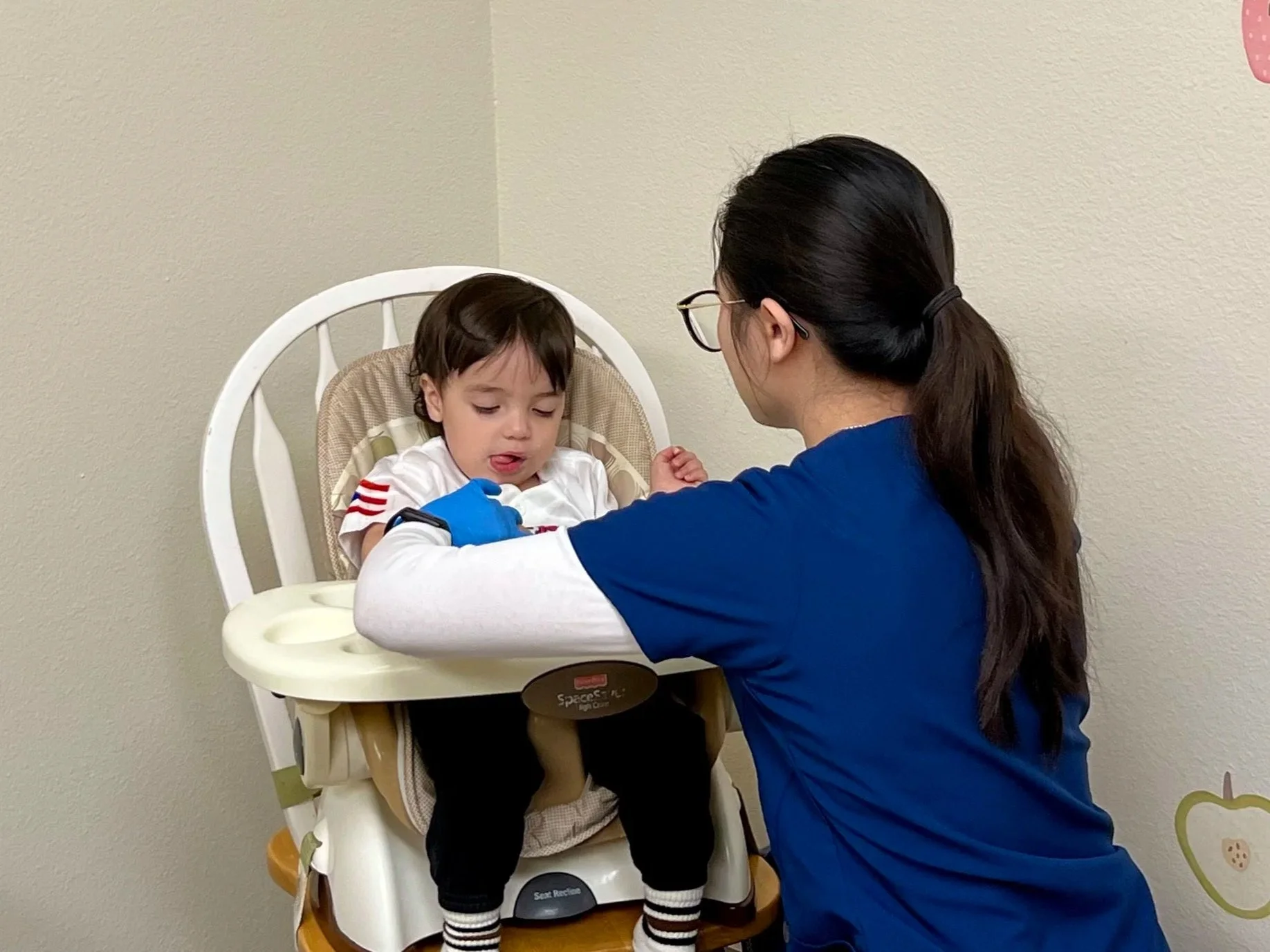
Pediatric feeding Therapy in Orange county
Helping children who struggle with eating, textures, and stressful mealtimes build confidence and skills.
We help children who…
eat a very limited range of foods
gag, choke, or avoid certain textures
have difficulty transitioning to solids
take a long time to eat or refuse meals
experience stressful or emotional mealtimes
Early support can make a big difference—let’s talk about what’s going on:
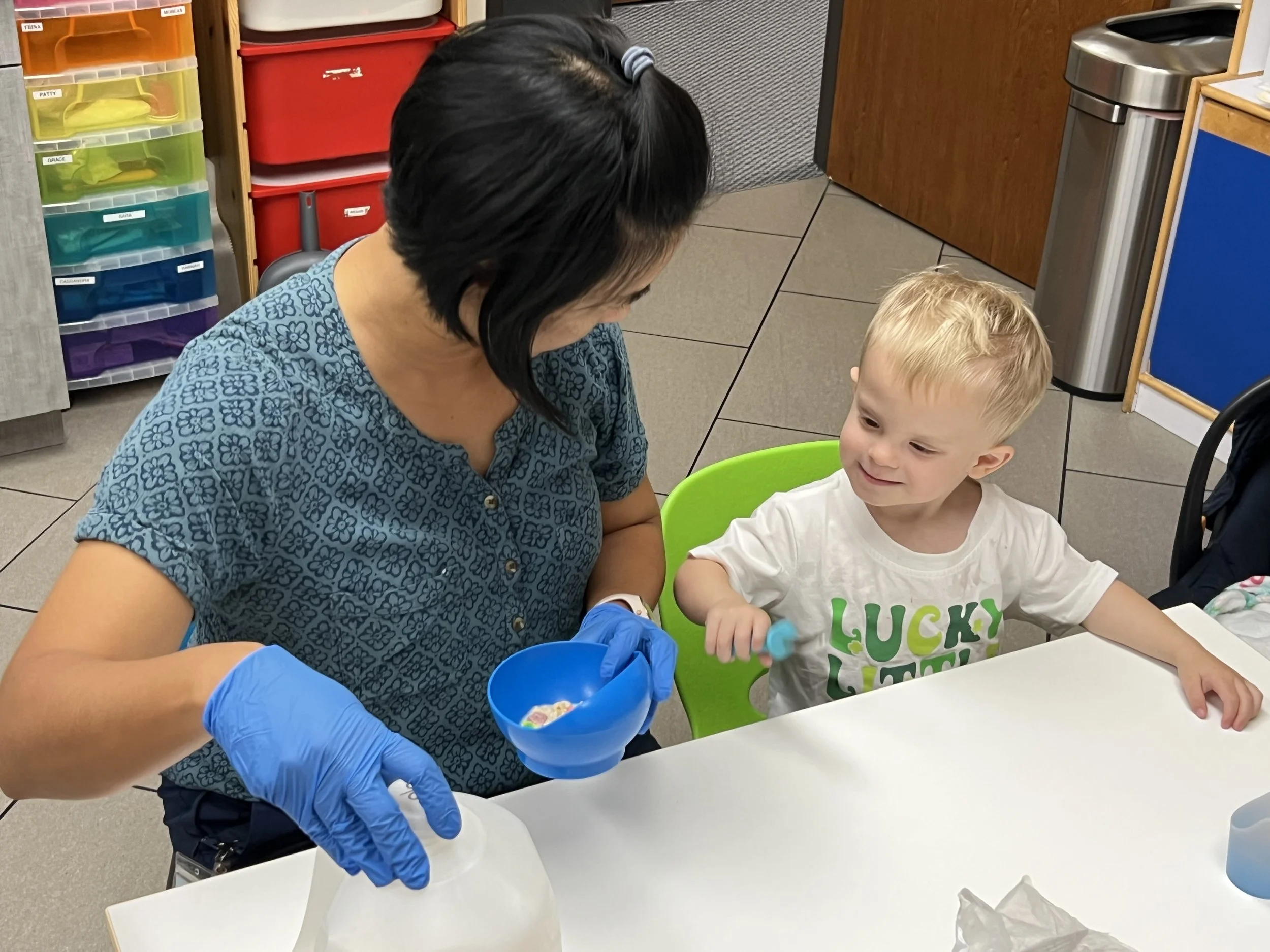
Is Feeding Therapy Right for My Child?
Feeding therapy may help if your child:
Eats a very limited range of foods
Refuses certain textures or food groups
Gags, coughs, or vomits during meals
Has difficulty chewing or swallowing
Struggles with transitioning to solids
Takes an unusually long time to eat
Experiences frequent mealtime stress
If any of this sounds familiar, you’re not alone.
How Feeding Therapy Helps
Our pediatric feeding therapy focuses on helping children feel safe, confident, and successful with eating.
We work on:
Expanding food variety
Improving oral motor skills (chewing, swallowing)
Reducing gagging or food refusal
Increasing comfort with different textures and smells
Making mealtimes more positive and less stressful
We meet your child where they are—and build from there.
What Feeding Therapy Looks Like
Every child’s plan is individualized, but therapy often includes:
1. Comprehensive Evaluation
We look at:
Oral motor skills
Sensory processing
Feeding history
Mealtime routines
2. Personalized Treatment Plan
Based on your child’s needs, we create a step-by-step plan to support progress.
3. Play-Based, Child-Led Approach
We use fun, engaging activities to help children explore and interact with food without pressure.
4. Parent Coaching
You’ll learn practical strategies you can use at home to make mealtimes easier and more successful.
Common Feeding Challenges We Treat
We support children with:
Picky eating or very limited diets
Difficulty transitioning to purees or solids
Gagging, choking, or vomiting with foods
Sensitivity to textures, temperatures, or smells
Mealtime behavioral challenges or food refusal
Delayed self-feeding skills
Who Provides Feeding Therapy?
Feeding therapy may be provided by occupational therapists or speech-language pathologists, depending on your child’s needs.
Our team collaborates across disciplines to provide coordinated care. Many of our therapists are advanced practice certificate holders in Swallowing Assessment/ Evaluation/ Intervention (SWC).
Explore Feeding Concerns
If you’re seeing specific challenges, you may find these helpful:
Why Early Support Matters

Early evaluation can help:
Reduce stress around meals
Support healthy growth and nutrition
Build positive feeding experiences
Prevent longer-term feeding difficulties
Early guidance can make a meaningful difference.
Why Families Choose Us

Experienced pediatric therapy team with multiple SWC certified therapists
Collaborative approach across OT, speech, and feeding
Focus on the whole child—not just the behavior
Long-standing, trusted clinic serving Orange County and South Bay families
Most major insurance plans accepted - view accepted insurances here
Serving Families Across Orange County
We provide feeding therapy for children throughout Orange County, including Cypress, Los Alamitos, Garden Grove, Huntington Beach, Long Beach, and surrounding communities
Take the First Step
If your child is struggling with feeding, early support can make a big difference.
Schedule an evaluation today and we’ll walk with you every step of the way:
Frequently Asked Questions About Pediatric Feeding Therapy
-
Feeding therapy can help children improve oral motor skills, chewing, swallowing, food variety, sensory tolerance, self-feeding skills, and overall comfort with eating.
-
You may want to seek an evaluation if your child frequently gags, vomits, refuses entire food groups, struggles with textures, has difficulty transitioning to solids, or experiences stressful mealtimes regularly.
-
Many children go through phases of picky eating, but feeding therapy may help when a child eats a very limited range of foods, experiences significant stress around meals, or struggles to meet nutritional needs.
-
Feeding challenges can have many contributing factors, including sensory processing differences, oral motor delays, medical history, anxiety around eating, developmental delays, or negative experiences with feeding.
-
Many insurance plans provide coverage for medically necessary feeding therapy services. Coverage varies by plan, and our team can help families understand benefits and authorization requirements.
-
Every child’s progress is different. Some children benefit from short-term support, while others may need ongoing therapy depending on the severity and complexity of feeding challenges.
-
Feeding therapy can support infants, toddlers, children, and teens. Early support may help prevent feeding difficulties from becoming more stressful over time.
-
Yes. Parent coaching is an important part of feeding therapy. We work closely with families to provide practical strategies that support progress during everyday meals at home.