
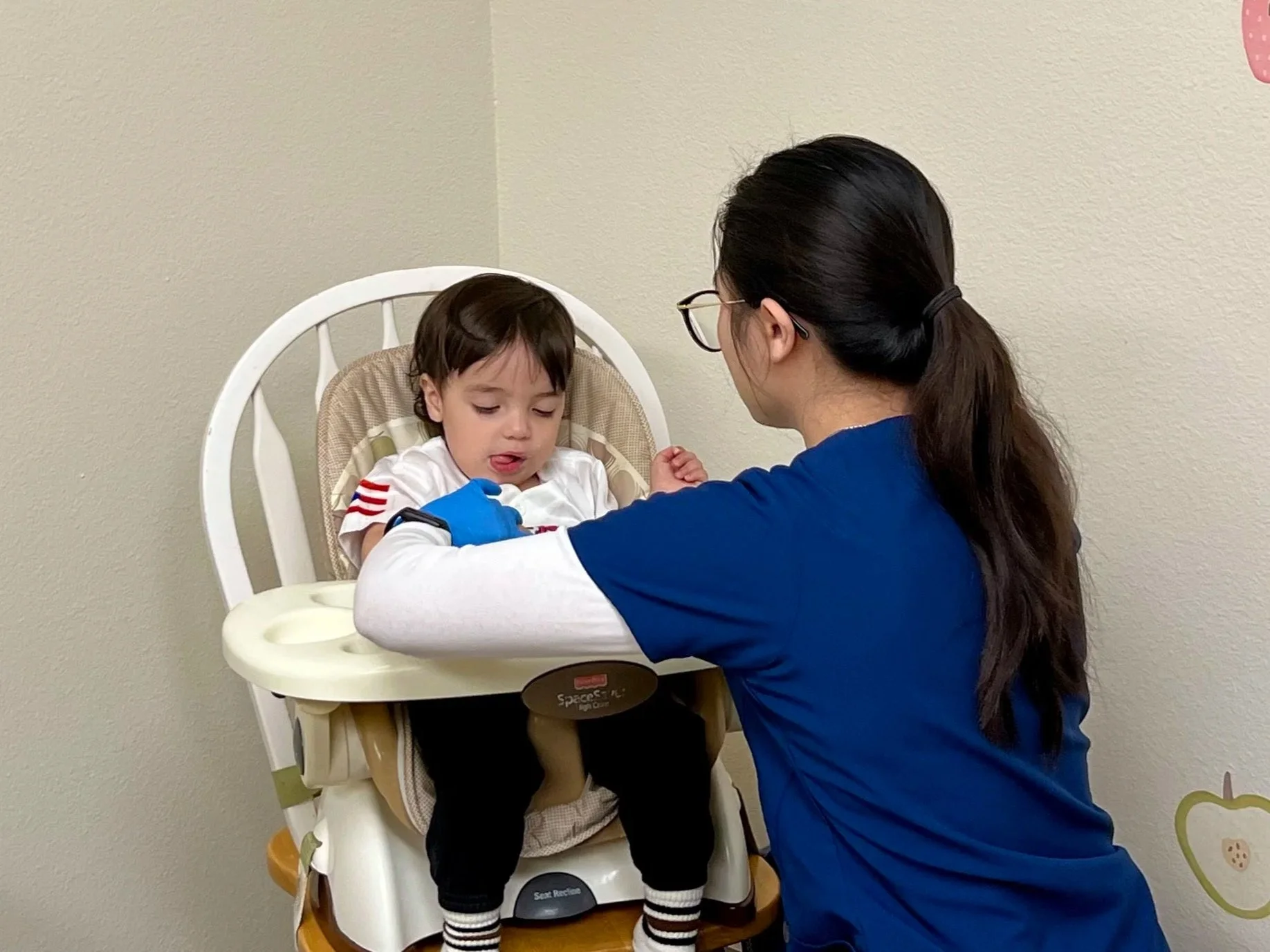
Is Your Child Struggling to Transition Off Bottles or Pureed Foods?
Is your baby or toddler still relying on bottles or pureed foods?
Many families feel unsure when feeding transitions take longer than expected. Some children gag on textures, refuse solids, or seem unsure how to chew safely.
Early support can help build the skills and confidence needed for successful mealtimes.
If you’re wondering whether your child’s feeding development is on track, our therapists are happy to help you think through next steps. You can call our clinic to ask questions or schedule a feeding evaluation whenever you feel ready.
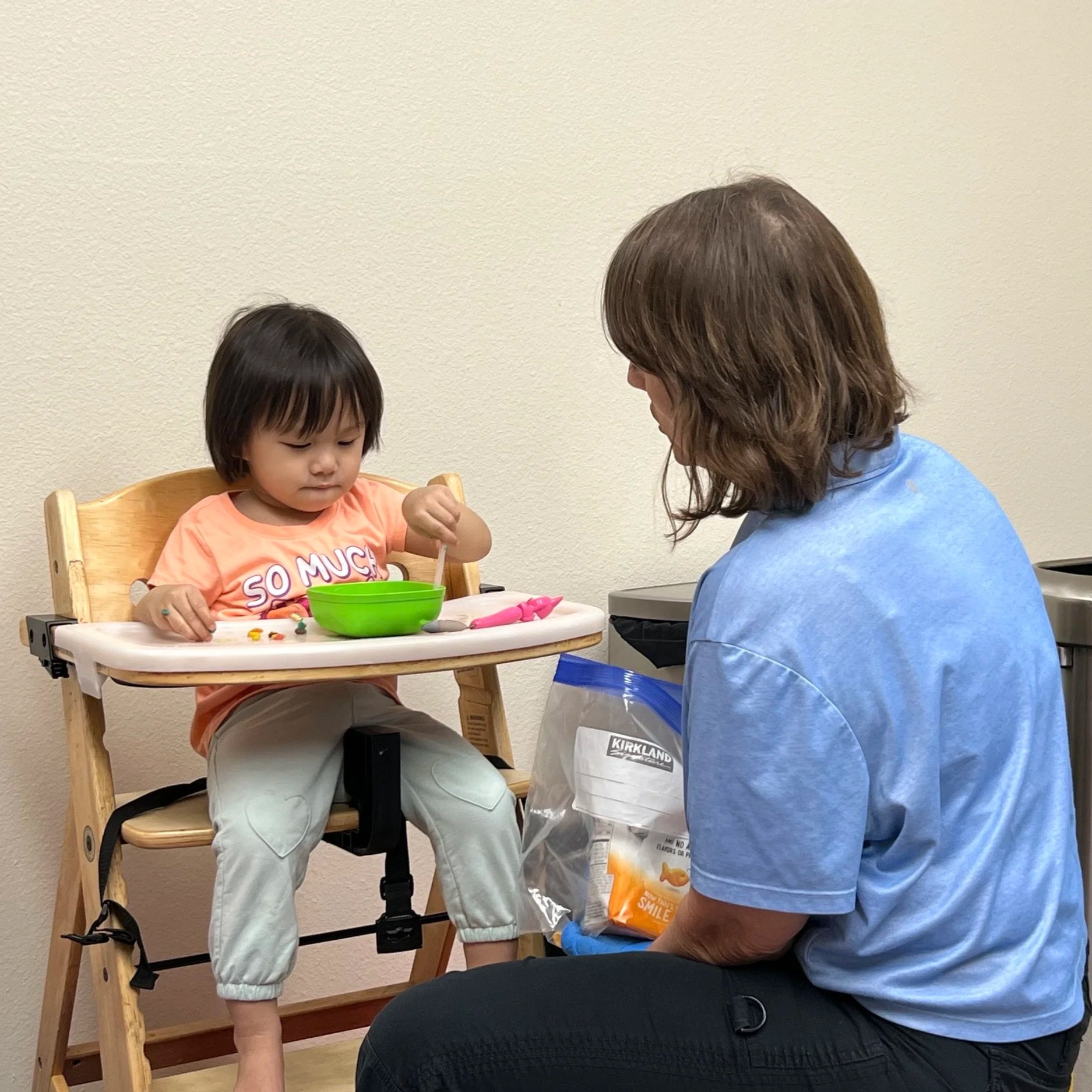
You may notice your child:
still relies heavily on bottles for nutrition
struggles to move from purees to textured foods
gags or coughs when trying solids
spits out or holds food in the mouth
shows limited chewing skills
prefers only smooth or blended foods
becomes upset or stressed at mealtimes
Some children who have difficulty transitioning to textured foods may gag or struggle to safely manage solids. If your child frequently gags or coughs while eating, learn more about feeding safety and coordination →
Some children who have difficulty transitioning to solids also develop a very limited diet as they get older. If your child eats only a few foods, you may also want to read about picky eating here.
Why some children struggle with this transition
Moving from liquids and purees to solid foods requires many developmental skills.
Challenges may be related to:
oral-motor coordination and strength
sensory sensitivities to texture or taste
posture and stability while eating
delayed feeding skill progression
medical or early feeding history
Understanding the underlying cause helps guide effective therapy.
How feeding therapy helps
Feeding therapy focuses on building safe, confident eating skills in a supportive environment.
Your child may work on:
developing chewing patterns and tongue movement
increasing tolerance for new textures and consistencies
improving posture and positioning during meals
practicing gradual food progression strategies
creating calmer, more predictable mealtime routines
Therapy sessions are play-based and individualized to your child’s needs.
Learn more about feeding therapy here.
Why early support matters
When feeding transitions are delayed, children may develop stronger texture aversions or fall behind in oral-motor skill development. Early therapy can help prevent frustration and support safer, more successful eating patterns.
What to expect at your child’s feeding evaluation
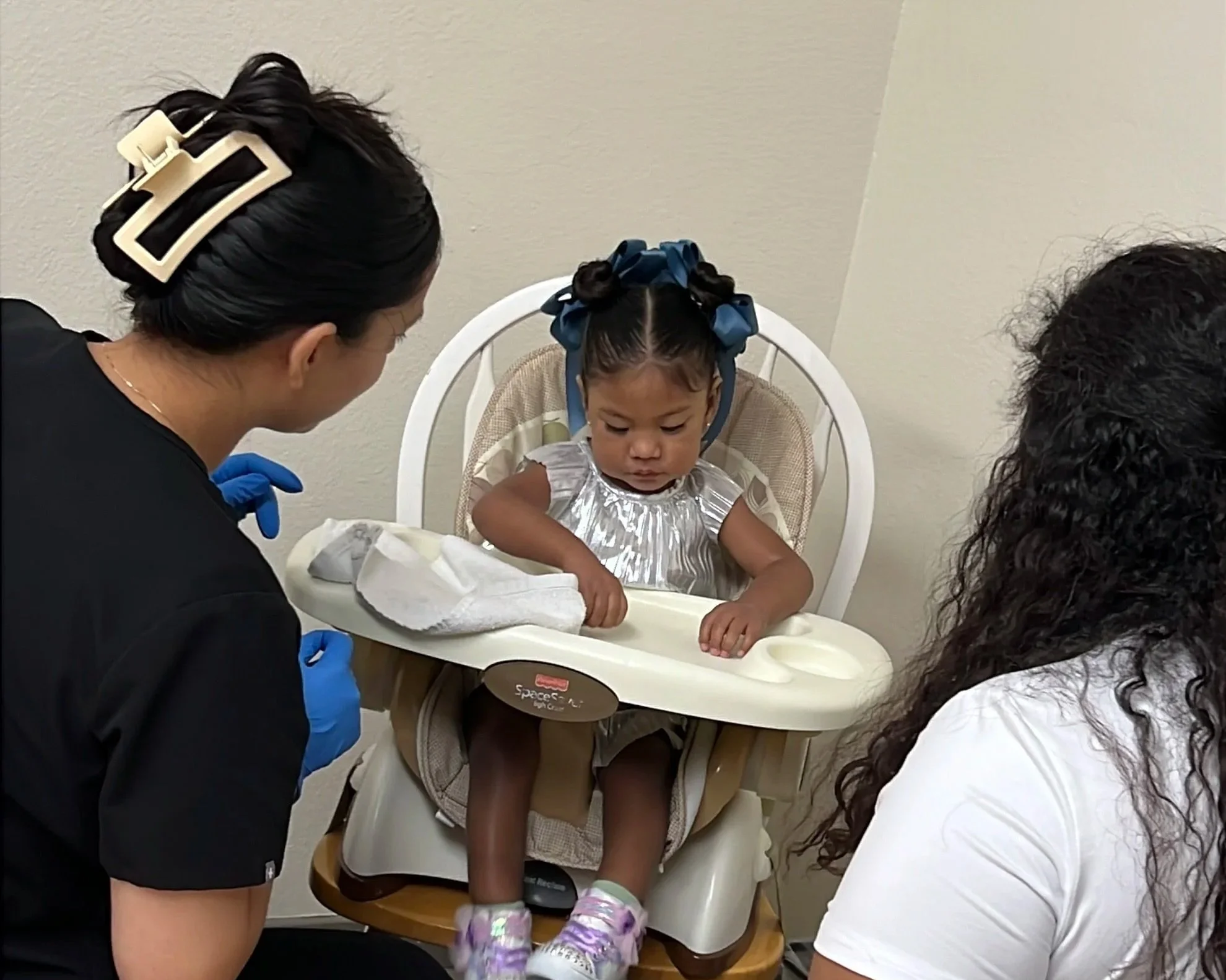
During the evaluation we will:
review feeding history and current concerns
observe eating skills and responses to different foods
assess oral-motor, sensory, and positioning factors
provide clear recommendations and next steps
Parents leave with a better understanding of how to support their child’s feeding development.
Why families choose feeding therapy
at South Coast Pediatric Physical Therapy
Experienced pediatric therapists trained in feeding development
Gentle, child-led approach that builds comfort with new foods
Practical coaching strategies for parents
Coordination with pediatricians and specialists when appropriate
Most major insurance plans accepted - view accepted insurances here
Concerned about your child’s feeding transition?
We can help you understand what’s happening and what next steps make sense.